FOR THE ENVIRONMENT – BEATA’S ICELANDIC ADVENTURE
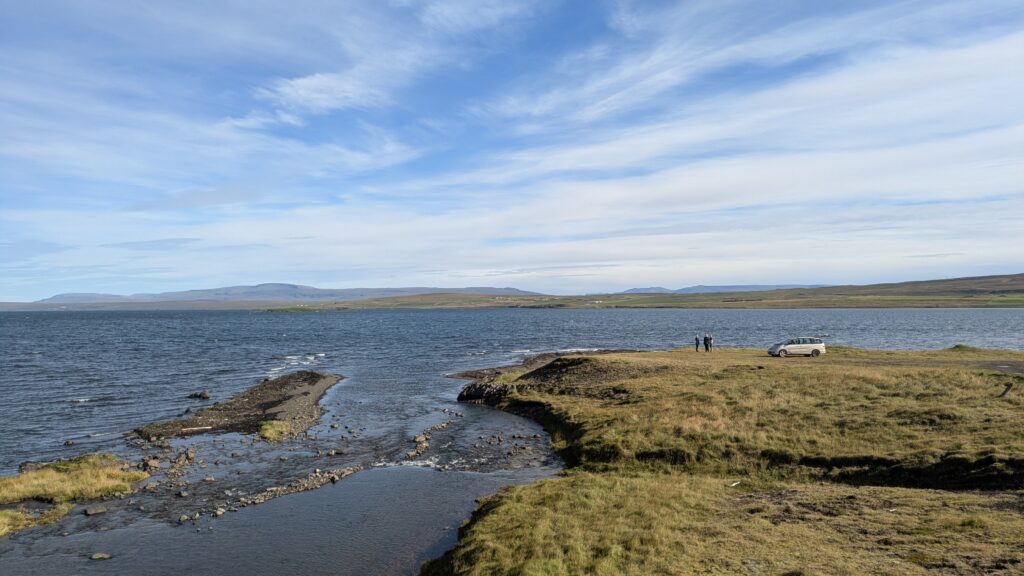
Iceland is a place where, standing face to face with the grandeur of nature that in many parts of the world has been lost through predatory human activity, one can once again realise the original place of humankind within the harmonious order shaped by the living forces of the earth. Before the vast lava fields carpeted with lichen like a green mist, before the volcanoes whose depths still tremble with the planet’s hidden fire, and before the jagged edges of glaciers that charge forward, one perceives the insignificance of the struggles that in daily life consume us.
My bond with Iceland is a special one. I first visited the Land of Fire and Ice in 2018. I was a student of the AGH University of Science and Technology in Cracow then and moved in with a few friends to earn some money during the summer break. A year later I returned with my partner. Converted into a mobile base, our car carried us from Cracow to Hirtshals in Denmark, where we boarded the ferry to Seyðisfjörður. For several months of adventure the car became our home, and that minimalist existence, lived in closeness with nature, inspired me to write a collection of stories entitled Islandówki or Icelandic Adventures and Recipes (org. Islandówki, czyli islandzkie przygody i przepisy), which unveiled the island’s reality from an unusual perspective of two travellers moving from one campsite to another, immersing themselves in the island’s culture without the membrane of guides or travel agencies.

When I came back to Poland, the reality around seemed too narrow. After months of saturating myself with the limitless settings, the advancing urbanisation became unbearable. I longed with all my heart to return to Iceland, and although as a film director my schedule is relentlessly full, for the Team of Bona Fides nothing is impossible. They found a project better than I could ever have dreamed of — cleaning the coastline at the crossroads between the Westfjords and the North of the island, which was precisely what I had wished for after exhausting months on film sets.

My project began at the end of August, just in time to savour the short-lived Icelandic summer. After a few days spent in Reykjavík, we were transported to the enchanting place called Brú, so unique that it cannot be found on any map. Brú, which in Icelandic means “bridge”, is a landmark in the open terrain, situated a few kilometres from the small settlement of Stadur, serving as a point of orientation on the road. There was nothing around us besides scenic landscapes, pastures where lambs and Icelandic horses grazed, and distant farms scattered several kilometres away. We were accommodated in a building that had once served as a peripheral post office with all the facilities required for horse postmen who stopped there in the past.
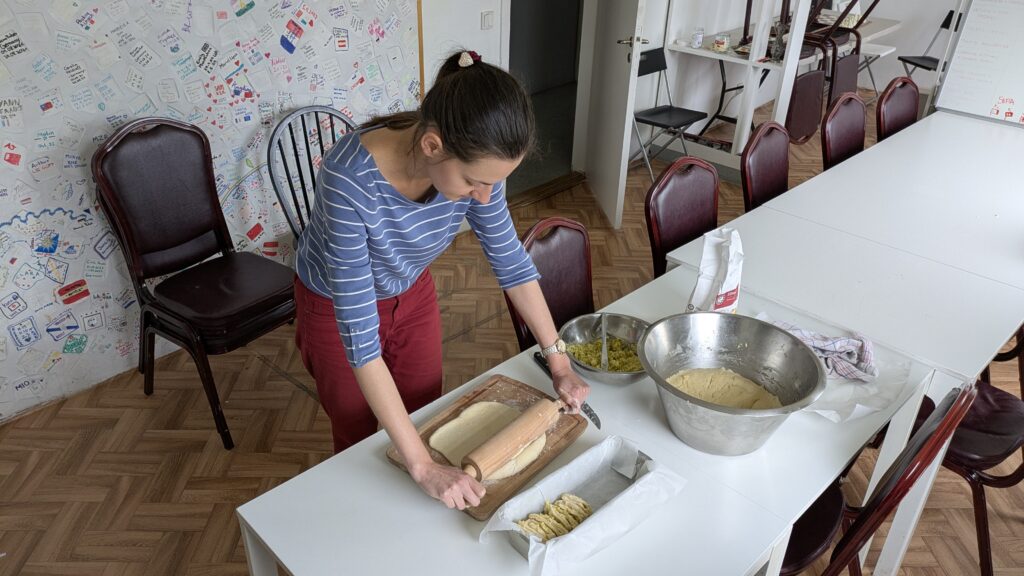
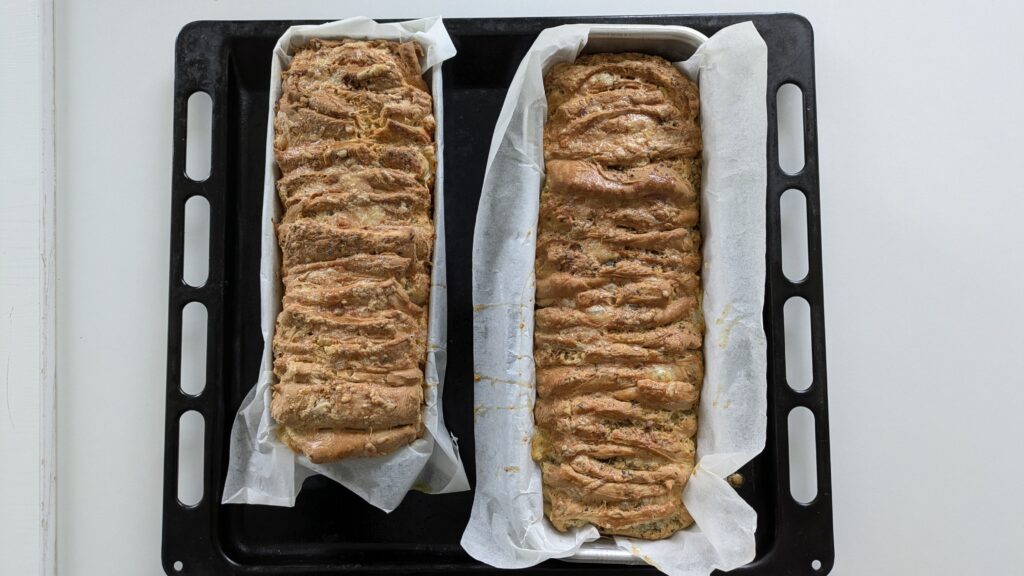
Life in the countryside was a perfect opportunity to reflect upon the rhythm of one’s own everyday existence. Planning meals several days in advance, baking bread by hand, and sharing responsibilities within the group proved essential in order to function in Brú, which lies 85 km from Borgarnes, the nearest town. The distinct way of life, rooted in physical labour and self-sufficiency, enabled me to chew over the dominant model of modern existence, which has distanced humankind from nature.
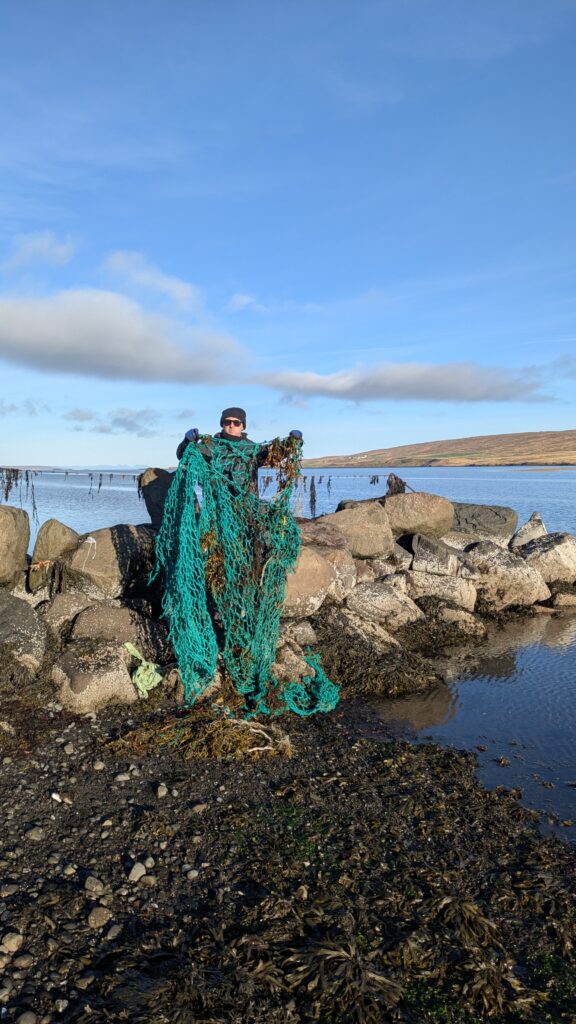
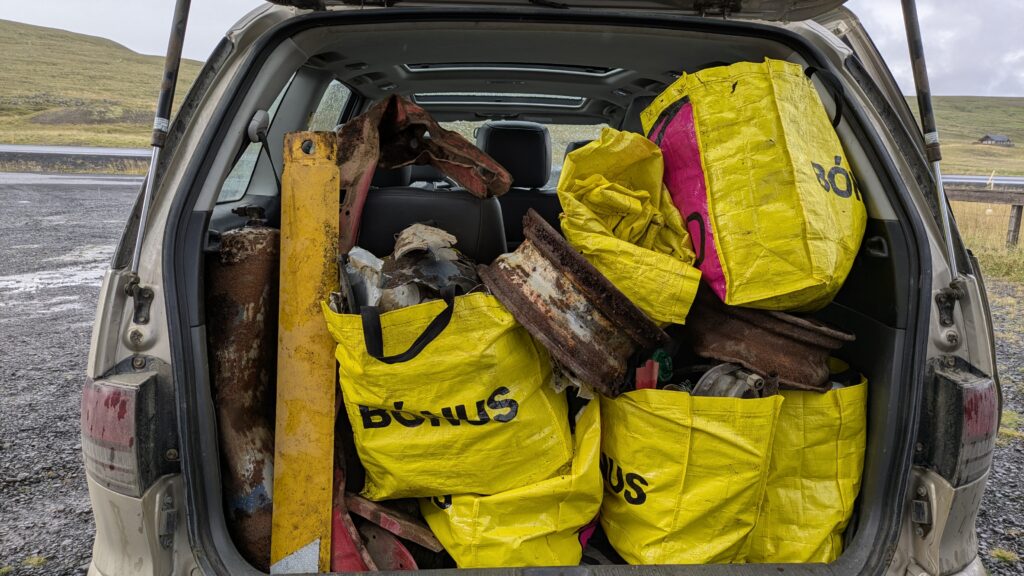
Our days resembled one another. From Monday to Friday, around 10:00 a.m., we set off by car toward one of the two nearby fjords— Hrútafjörður or Bitrufjörður. Equipped with bags, we dispersed along the shore in search of waste; there was always an abundance. It was difficult to believe that even though we circled back frequently to the same places, there was always just as much rubbish as before. Certainly the prevailing items were ropes and nets coming from the fishing industry, though we also found countless plastic ropes, pipes, and colourful shotgun shells; the leftovers of hunters’ cartridges. A massive proportion consisted of microplastics — hazardous to animals that could swallow or choke on the fragments. We also stumbled upon helmets, buoys, enormous metal pipes, toothbrushes, combs, syringes and countless other objects, which should never reach the ocean. The amount of waste was so huge that you literally couldn’t let it lie; even though the bag was bursting at the seams, we continued.

Once the trunk was full, we got back to the Worldwide Friends Center and sorted the collected waste in detail in a specially designated room. We meticulously counted the number of plastic pipes, ropes, shotguns, bottles, caps, and items belonging to the intriguingly named category ”others”. We weighed the rubbish and devised a report, which was then sent to the organisation’s headquarters with the submission of data to the national Ministry in mind. Afternoons we brightened with trips to a nearby wild geothermal spring or to the pool and trampoline in the small town of Hvammstangi, known as Iceland’s seal capital, where once a week we delivered the sorted waste to the recycling centre.
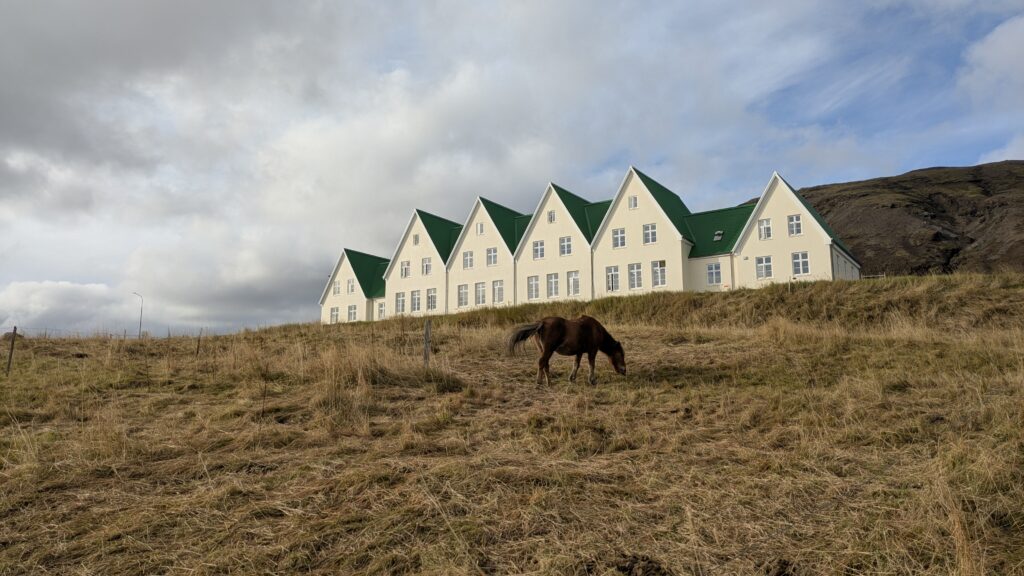
During the 65 days of my volunteering, I had the pleasure of calling around other parts of the island as well. I spent nearly a week in Laugarvatn, where I took part in a training course for volunteers organised by the National Agency, aimed at deepening understanding of Icelandic culture and national heritage. Apart from the thematic sessions and pure networking, we were able to practically expand our awareness of the relationship between cultural identity, sustainable development, and environmental responsibility during the geothermal bread baking at one of the small hot springs steaming by the shore of Lake Laugarvatn and hiking through the surrounding mountains.
During car transfers necessitated by the movement of volunteers between centres belonging to Veraldarvinir, I also visited Siglufjörður, where for several days I joined a group engaged in foresting activities. This small town, encircled on all sides by towering cliffs, has known vivid times—it was once, in the mid-twentieth century, one of the most important herring-fishing centres in Iceland. I also joined in the restoration works of a church in Kvíabekkur, a place that was once the estate of Ólafur bekkur Karlsson, one of the first settlers of Ólafsfjörður. This privately owned farmer’s church is believed to have been built soon after the adoption of Christianity around the year 1000, in the early pre-Reformation period.

I returned to Poland filled with beautiful memories and with a renewed conviction of how essential it is to take responsibility for the surrounding world. The scale of environmental pollution is unimaginable, even in such seemingly untouched corners of the Earth as Iceland. It is estimated that 11 million tons of waste lie on the seabed of the world’s oceans, continuously mixing with sediment, fragmenting, and, through the motion of waves, being steadily cast ashore. They pose an enormous threat to marine and terrestrial life alike.

We must all honestly examine our daily habits and ask ourselves whether we truly live in an environmentally conscious way. In the face of escalating pollution, solely waste segregation is not enough. The widespread phenomenon of greenwashing means that good practices are defeated, and waste prepared for recycling becomes a commodity traded on the market, ultimately ending up in landfills. Minor ecological efforts, which on their own generate a frightening CO₂ footprint, in fact have a negative effect; meaningful change requires bold, large-scale initiatives.

Beata Migas
„Rozmowy w podróży” Beata Migas – interview:
https://stronapodrozy.pl/nie-miejscowosc-nie-osada-po-prostu-punkt-na-mapie-beata-migas-w-poszukiwaniu-autentycznej-islandii/ar/c7p2-28196693